Iran Helicopter Crash: Drones Lead Search Near Azerbaijan Border
The tragic helicopter crash that claimed the lives of Iranian President Ebrahim Raisi, Foreign Minister Hossein Amir-Abdollahian, and other high-ranking officials on May 19, 2024, sent shockwaves across the globe. Occurring in the rugged, forested terrain of Iran's Eastern Azerbaijan province, perilously close to the Azerbaijani border, the incident immediately triggered a massive search and rescue operation. Amidst challenging weather and formidable geography, modern technology, specifically
drones, emerged as an indispensable tool in the desperate search. This catastrophic event not only highlighted the inherent dangers of aerial travel in difficult conditions but also underscored the critical role of advanced aerial reconnaissance in disaster response, particularly in sensitive border regions shared by nations like
irã and
azerbaijão.
The Tragic Incident and Immediate Aftermath
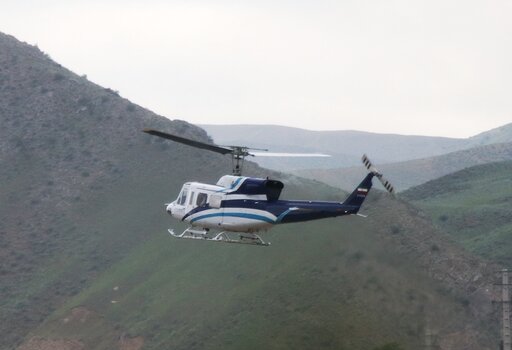
On a fateful Sunday, May 19, 2024, Iranian President Ebrahim Raisi was returning from a significant diplomatic engagement in Azerbaijan. He had been alongside Azerbaijani President Ilham Aliyev to inaugurate the Qiz Qalasi dam, a crucial joint infrastructure project symbolizing cooperation between the two nations. The journey back involved a helicopter convoy, with President Raisi's Bell 212 aircraft carrying him, Foreign Minister Hossein Amir-Abdollahian, East Azerbaijan Governor Malek Rahmati, and the Supreme Leader's representative to East Azerbaijan, Mohammad Ali Ale-Hashem.
As the convoy traversed the mountainous region near Varzaqan, en route to Tabriz, the helicopter carrying the President reportedly encountered severe weather conditions. State media reports confirmed that the incident occurred while the aircraft was passing through the Eastern Azerbaijan province, specifically near the city of Jolfa, which lies directly on the border with Azerbaijan. The subsequent disappearance of the helicopter sparked an immediate and frantic search. Rescue teams faced an uphill battle from the outset, battling dense fog, heavy rains, strong winds, and the rugged, forested landscape that significantly hampered visibility and access. The combination of adverse weather and challenging topography made conventional ground-based search methods extremely difficult, emphasizing the need for more agile and far-reaching solutions.
The Indispensable Role of Drones in the Search
In the face of these monumental challenges, the deployment of
drones proved to be a game-changer for the Iranian search and rescue efforts. As hours turned into a desperate night, conventional search methods were severely limited by the "dense forest terrain, aggravated by adverse weather conditions such as heavy rains, thick fog, and strong winds," as reported by Iranian state television. This is precisely where drones excelled. Equipped with advanced thermal imaging cameras, high-resolution optical sensors, and night vision capabilities, these unmanned aerial vehicles (UAVs) could penetrate the thick fog and darkness that grounded traditional helicopters and hampered human sight.
Drones offered several critical advantages in this context:
- Extended Visibility: Thermal cameras could detect heat signatures emanating from the wreckage or potential survivors, even through dense foliage and fog, where human eyes or standard cameras would see nothing.
- Access to Inaccessible Areas: The crash site was in a remote, mountainous, and heavily forested region. Drones could fly into deep valleys, over steep ridges, and through dense tree cover, reaching areas that ground teams would take hours or even days to navigate.
- Reduced Risk to Rescuers: Sending human search parties into such treacherous terrain, especially in poor weather, poses significant risks. Drones allowed for initial reconnaissance without endangering lives.
- Speed and Efficiency: Drones could cover vast areas much faster than ground teams, rapidly scanning wide swaths of land and narrowing down potential crash zones.
Multiple reports highlighted the deployment of a Turkish Akinci drone, which notably identified a heat source believed to be the crash site. While the initial search involved various ground teams and trained dogs, it was the aerial perspective provided by drones that ultimately helped pinpoint the precise location of the wreckage. The ability of these UAVs to provide real-time aerial intelligence, even in extreme conditions, was instrumental in guiding ground teams to the crash site. This critical assistance demonstrates
how drones assisted Raisi search operation near Azerbaijan, playing a pivotal role in a race against time.
Navigating the Iran-Azerbaijan Border Region
The location of the crash, in Iran's Eastern Azerbaijan province and near the Azerbaijani border city of Jolfa, adds a layer of geographical and geopolitical significance to the incident. The relationship between
irã and
azerbaijão, while generally cooperative, particularly on shared energy projects like the Qiz Qalasi dam, has seen periods of complexity. The fact that President Raisi was returning from a meeting with his Azerbaijani counterpart underscores the ongoing diplomatic engagements in the region.
The border area itself is characterized by its rugged and often unforgiving landscape, making any aerial incident particularly challenging for search and rescue operations. This specific region, with its dense forests and mountainous terrain, makes ground access difficult even in clear weather, let alone during a storm. The necessity of deploying advanced technology like
drones in such a sensitive and geographically challenging area highlights a broader trend in international disaster response. While the search was an Iranian-led operation, the proximity to the border and the involvement of international assistance (such as the Turkish drone) demonstrated the potential for cross-border cooperation in times of crisis. This event brings to light the complexities of
Iran president's death: drones in border search after Azerbaijan visit, emphasizing the intricate blend of geography, diplomacy, and technology in such high-stakes scenarios.
Lessons Learned and Future Preparedness
Preliminary and final investigative reports, released in August and September 2024 respectively, conclusively pointed to severe weather conditions as the primary cause of the helicopter crash. The final report explicitly stated that "thick fog" was present at the incident site. Some initial reports also cited the aircraft's inability to support the weight it carried, suggesting potential operational limitations compounded by the weather. This incident provides invaluable lessons for future aerial operations, particularly for VIP transport in challenging environments:
1.
Robust Weather Monitoring: The importance of real-time, highly localized weather data for flight path planning, especially in mountainous regions, cannot be overstated.
2.
Aircraft Suitability and Maintenance: Ensuring that aircraft are not only well-maintained but also suitable for the specific operational conditions, including altitude, terrain, and potential load, is paramount.
3.
Advanced Search & Rescue Technologies: The crash unequivocally proved the critical value of technologies like long-endurance, all-weather
drones equipped with multi-spectral sensors. Investing in such capabilities is essential for any nation, particularly those with vast, challenging geographies.
4.
Standardized Protocols for Border Regions: For incidents near international borders, clear protocols for information sharing and potential assistance between neighboring countries can significantly expedite response times and improve outcomes. This is particularly relevant for `irã` and `azerbaijão` and other nations with complex frontiers.
The tragic loss of life could not be averted, but the incident offers crucial insights into improving disaster response mechanisms globally.
Conclusion
The helicopter crash that claimed the lives of Iranian President Ebrahim Raisi and his delegation was a profound tragedy with significant regional implications. Beyond the immediate shock and sorrow, the incident served as a stark demonstration of both the immense challenges of search and rescue operations in severe conditions and the transformative power of modern technology. The deployment of
drones, capable of navigating through dense fog and darkness with thermal imaging, proved indispensable in locating the crash site near the
Azerbaijan border. This event underscores the critical need for continued investment in advanced aerial reconnaissance and emergency response capabilities. As countries like
Iran continue to grapple with complex geographical and climactic conditions, the role of unmanned aerial vehicles will only grow in importance, solidifying their status as frontline tools in future disaster management and highlighting the ever-evolving intersection of technology, geography, and crisis response in an interconnected world.