The Tragic Incident and Its Geopolitical Backdrop
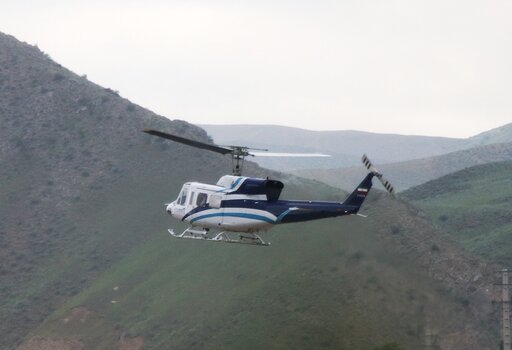
On a somber Sunday, May 19, 2024, the world watched as news emerged of a helicopter carrying high-ranking Iranian officials, including President Ebrahim Raisi and Foreign Minister Hossein Amir-Abdollahian, disappearing in the rugged terrain of Iran's East Azerbaijan province. The Bell 212 helicopter, en route to Tabriz, was carrying a delegation that also included East Azerbaijan Governor Malek Rahmati and the Supreme Leader's representative, Mohammad Ali Ale-Hashem. Their tragic demise, confirmed after an arduous search, sent shockwaves globally, marking a pivotal moment in Iranian politics.
The incident occurred in a particularly sensitive region, near the city of Jolfa, situated precariously close to the border with Azerbaijan. This geographical proximity added a layer of international interest and complexity to the unfolding drama. Prior to the crash, President Raisi had been in Azerbaijan, meeting with President Ilham Aliyev to inaugurate the Qiz Qalasi dam – a testament to ongoing collaborative projects between the two nations and the third such joint venture. This pre-existing diplomatic engagement underscored the regional significance of the area, making the subsequent search operation even more critical from a geopolitical standpoint. The urgency of locating the fallen aircraft and its passengers mobilized an extensive response, where advanced technology would prove to be indispensable. For more details on the initial search efforts, consider reading Iran Helicopter Crash: Drones Lead Search Near Azerbaijan Border.
Unprecedented Search Challenges: When Nature Fought Back
The immediate aftermath of the helicopter's disappearance plunged search and rescue teams into a desperate race against time and formidable natural adversaries. The location of the crash, deep within the mountainous and densely forested region of Varzaqan in Iran's East Azerbaijan province, presented an enormous challenge. This was not merely difficult terrain; it was an environment designed to conceal and impede. Vast expanses of thick forest, characterized by steep inclines and treacherous paths, made ground access nearly impossible in many areas. Traditional search methods, relying on human eyesight and foot patrols, were severely hampered by the sheer scale and complexity of the wilderness.
Adding to the already daunting landscape were severe weather conditions that descended upon the region. Heavy rains had rendered the ground boggy and unstable, increasing the risk for ground teams. More critically, a pervasive, thick fog enveloped the mountains, drastically reducing visibility to mere meters. This fog, combined with strong, unpredictable winds, effectively grounded conventional aircraft, including larger search helicopters and planes that might typically assist in such an operation. The combination of dense forest, torrential rain, and an impenetrable fog created an almost insurmountable barrier, turning a high-stakes rescue mission into a gruelling ordeal where every minute counted. The critical need for tools that could overcome these natural obstacles became immediately apparent.
Drones to the Rescue: A Critical Technological Edge
In the face of such overwhelming natural resistance, the conventional wisdom of search and rescue operations quickly gave way to the undeniable necessity of advanced technology. It was in this critical juncture that drones emerged as an indispensable asset, providing a beacon of hope in the otherwise bleak search for the missing helicopter. The deployment of irã drones azerbaijão border region for this high-profile search marked a significant moment, showcasing their evolving role in disaster response.
Iranian authorities swiftly mobilized various types of Unmanned Aerial Vehicles (UAVs), commonly known as drones, to aid the search. These weren't just hobbyist drones; they were sophisticated machines equipped with capabilities uniquely suited to the treacherous conditions. Equipped with high-resolution cameras, often including thermal imaging sensors, these drones could pierce through the dense fog and darkness in ways human eyes or even manned aircraft could not. Thermal cameras, in particular, were crucial for detecting heat signatures from the wreckage or any potential survivors, even when hidden by foliage or obscured by low visibility.
The ability of drones to navigate rugged, inaccessible terrain without risking human lives was paramount. While ground teams braved the elements and challenging topography, drones could fly overhead, providing a crucial bird's-eye view. They could meticulously scan vast swathes of land far more rapidly and efficiently than ground teams, identifying potential crash sites, tracking paths, and relaying real-time video footage back to command centers. This real-time data allowed search coordinators to direct ground teams to specific areas, saving invaluable time and resources. Unlike manned helicopters, which were grounded by the extreme weather, many drones, especially those designed for adverse conditions, could operate in moderately strong winds and reduced visibility, offering the only aerial perspective available for extended periods.
Moreover, the deployment of drones minimized the risk to human searchers. Navigating the dense forest, steep slopes, and treacherous weather conditions posed significant dangers to rescue personnel. By sending drones into the most hazardous areas first, authorities could conduct preliminary assessments and pinpoint potential locations, thereby reducing the exposure of human teams to unnecessary risks. This strategic use of technology not only enhanced the efficiency of the search but also ensured the safety of the responders.
Practical Tip: For organizations involved in search and rescue, investing in a diverse fleet of drones equipped with various sensor technologies (thermal, optical zoom, LiDAR) is vital. Training personnel extensively in drone operation, data analysis, and flight planning for adverse weather conditions can significantly improve response times and success rates in future emergencies. The experience with irã drones azerbaijão search operation provides a stark reminder of their critical utility.
The deployment of drones, alongside dedicated search and rescue teams and trained dogs, represented a multi-faceted approach to a complex problem. Without the unique capabilities of UAVs to overcome the severe limitations imposed by the weather and terrain, the search for President Raisi's helicopter would have been immeasurably more difficult and prolonged. Read more about how these crucial tools were deployed in the immediate aftermath of the tragedy in Iran President's Death: Drones in Border Search After Azerbaijan Visit.
Unraveling the Cause: Weather's Deadly Hand
While the search operation showcased the resilience of rescue teams and the technological prowess of drones, the focus quickly shifted to determining the cause of the catastrophic incident. Preliminary reports from Iranian security agencies, released in August 2024, pointed directly to the severe weather conditions and the aircraft's inability to withstand the weight it was carrying as primary factors. This was further corroborated by the final report from the special Iranian investigative committee on September 1, which firmly attributed the accident to adverse weather, specifically highlighting the presence of "thick fog" at the crash site.
This conclusion underscores a critical aspect of aviation safety, especially in mountainous regions. Bell 212 helicopters, while generally reliable, have operational limitations, particularly concerning maximum takeoff weight and performance in challenging atmospheric conditions like dense fog and strong winds, which can significantly reduce lift and maneuverability. The combination of heavy load, low visibility, and turbulent air currents likely pushed the aircraft beyond its safe operating parameters, leading to the tragic loss of control. The very weather conditions that hampered the search, therefore, were also identified as the principal culprits behind the crash itself.
The findings serve as a grim reminder of the perpetual battle between human technology and the raw power of nature. Even with modern aircraft and experienced pilots, extreme weather can pose an insurmountable threat. This tragedy will undoubtedly lead to renewed scrutiny of flight protocols, weather assessment procedures, and aircraft suitability for high-altitude, mountainous flight paths, particularly for VIP transport in regions prone to sudden weather shifts.
The Broader Implications and Future of Search Operations
The helicopter crash that claimed the lives of President Raisi and other senior officials reverberated far beyond Iran's borders, triggering a period of political uncertainty within the country. However, amidst the geopolitical ramifications, the search operation itself offers invaluable lessons for global disaster response and emergency management. The incident starkly highlighted the evolving role of technology in saving lives and locating lost assets, particularly in scenarios where human access is limited or dangerous.
The successful deployment and critical contribution of irã drones azerbaijão border search operation set a precedent. It underscored that in modern search and rescue, particularly in complex environments like dense forests or mountainous regions afflicted by severe weather, UAVs are no longer merely supplementary tools but fundamental components of an effective response strategy. Their ability to provide rapid aerial reconnaissance, thermal imaging, and access to otherwise impenetrable areas significantly shortens search times and increases the probability of success, whether for locating wreckage or, crucially, for finding survivors.
Looking ahead, the capabilities of drones in SAR are only set to expand. We can anticipate more sophisticated UAVs equipped with advanced AI for autonomous navigation and object recognition, swarm technology for wider and faster coverage, and enhanced sensor arrays capable of detecting more subtle clues. The integration of drones with satellite imagery, ground-penetrating radar, and advanced weather forecasting systems will create a more holistic and robust emergency response framework. The tragic events near the Azerbaijan border serve as a powerful testament to the indispensable nature of these unmanned eyes in the sky, shaping the future of how we respond to crises and navigate the unpredictable challenges posed by nature.
Conclusion
The tragic helicopter crash involving Iranian President Ebrahim Raisi and his delegation near the Azerbaijan border in May 2024 was a multi-faceted event, marked by severe weather, challenging terrain, and a desperate search for answers. Amidst the formidable obstacles presented by dense fog, heavy rain, and rugged forests, drones emerged as a pivotal technology, playing a critical role in locating the crash site. The deployment of irã drones azerbaijão region demonstrated the unparalleled advantage of UAVs in situations where traditional search methods are severely hampered. Their ability to conduct aerial surveillance, utilize thermal imaging, and navigate inaccessible areas proved indispensable, underscoring their growing importance in modern search and rescue operations. This incident not only highlighted the dangers of flying in extreme weather but also solidified the indispensable position of advanced technological solutions in global emergency response, paving the way for more efficient and safer search efforts in the future.